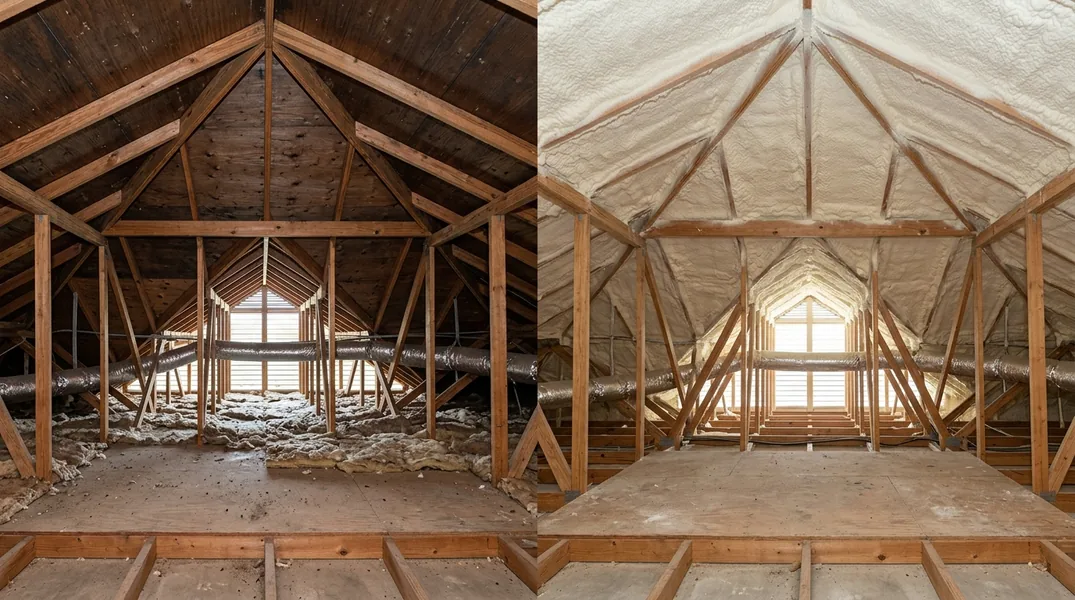
Understanding Postwar Block Construction in South Florida
Postwar block homes built throughout the 1950s and 1960s represent a significant portion of residential architecture in Lake Clarke Shores, Lake Worth Beach, and surrounding communities in West Palm Beach. These homes were constructed with concrete block exterior walls, often with minimal or outdated insulation systems that no longer meet modern energy efficiency standards. The thermal mass of concrete block provides some passive cooling benefits in Florida's climate, but without proper attic insulation, these homes lose tremendous amounts of conditioned air through the roof.
The challenge with postwar block construction is that many of these homes were built before energy codes required adequate attic insulation. Homeowners today often find themselves dealing with deteriorated fiberglass batts, settling blown-in cellulose, or worse, no insulation at all. Given West Palm Beach's intense heat and humidity, upgrading your attic insulation is one of the smartest investments you can make for comfort, energy savings, and home durability.
Spray Foam vs Blown-In Insulation: Which Performs Better in Florida Heat?
When comparing spray foam versus blown-in insulation for attics, the differences become especially clear in Florida's subtropical climate. Blown-in insulation, whether cellulose or fiberglass, relies on air pockets trapped within the material to provide an R-value. Over time, particularly in humid environments, blown-in materials settle and compress, losing effectiveness. Moisture absorption is another concern with traditional blown-in products, which can lead to mold growth and reduced performance in our tropical weather patterns.
Attic Spray Foam Insulation creates an air-sealed barrier that doesn't settle or degrade like blown-in alternatives. When spray foam is applied to your attic, it expands to fill every cavity, crack, and void, eliminating air leaks that allow conditioned air to escape. This superior air sealing means your HVAC system works less hard to maintain comfortable temperatures, directly translating to lower energy bills month after month. In the humid Florida environment, spray foam's moisture resistance provides additional protection against the mold and mildew issues that can plague older insulation types.
Spray Foam vs Fiberglass: Why Modern Homes Need Better Solutions
Fiberglass batts have been the standard attic insulation for decades, and while they're affordable, they fall short in several critical areas, especially in Florida homes. Fiberglass provides decent R-value when first installed, but it doesn't address air leakage, which accounts for a significant portion of energy loss in most attics. Additionally, fiberglass can absorb moisture, particularly in our humid climate, which reduces its insulating properties and creates conditions favorable to mold growth. Many postwar block homes in Lake Clarke Shores and Lake Worth Beach still have original or aging fiberglass that has settled unevenly, leaving some areas under-insulated.
Spray foam insulation outperforms fiberglass in nearly every measurable way. It provides superior R-value per inch of thickness, creates an impermeable air barrier, and resists moisture infiltration. Unlike fiberglass, which requires proper installation between studs and joists to be effective, spray foam conforms to irregular attic spaces, ensuring complete coverage. For homeowners dealing with the unique challenges of older block construction, spray foam eliminates the performance gaps that plague traditional fiberglass installations. The long-term durability of spray foam means you won't face the settling and degradation issues that make fiberglass less reliable over decades.
Spray Foam vs Cellulose: Moisture Management in Humid Florida Climates
Cellulose insulation, made from recycled paper products, is often marketed as an eco-friendly alternative to fiberglass. While the environmental angle appeals to many homeowners, cellulose has significant drawbacks in Florida's climate. Cellulose is highly hygroscopic, meaning it readily absorbs moisture from the humid air. Once cellulose absorbs water, it loses insulating value and becomes vulnerable to mold, mildew, and wood rot. In a state where humidity regularly exceeds 80 percent, cellulose insulation is essentially fighting a losing battle against moisture infiltration.
Closed Cell Spray Foam Insulation and Open Cell Spray Foam Insulation both handle moisture far more effectively than cellulose. Closed cell foam, in particular, is vapor-impermeable and provides excellent moisture resistance, making it ideal for Florida attics where humidity control is paramount. Open cell foam is slightly more permeable but still vastly superior to cellulose in moisture management. When you choose spray foam over cellulose, you're investing in insulation that will maintain its performance characteristics for decades without succumbing to the moisture challenges that plague paper-based products in our climate.
Best Insulation for Attic: Why Spray Foam Leads the Market
Determining the best insulation for attic spaces requires evaluating performance, durability, air sealing, moisture resistance, and long-term value. When all these factors are considered, spray foam emerges as the superior choice for postwar block homes and modern constructions alike. The best insulation for attic applications must address both heat transfer and air leakage, and spray foam is the only common insulation product that effectively tackles both problems simultaneously. Traditional insulation materials focus primarily on R-value, but spray foam's air-sealing properties provide benefits that blown-in, fiberglass, and cellulose simply cannot match.
For homeowners in Lake Clarke Shores, Lake Worth Beach, and throughout West Palm Beach, choosing spray foam means choosing an insulation solution backed by science and proven performance. Spray foam reduces energy consumption, improves indoor air quality by preventing outdoor pollutants from entering through air leaks, and protects your home's structural integrity by managing moisture. The initial investment in spray foam is higher than traditional insulation, but the energy savings, durability, and performance benefits justify the cost over the life of your home. If you're serious about maximizing comfort and efficiency in your postwar block home, spray foam is unquestionably the best insulation for attic applications.
Getting Started with Spray Foam Insulation Near Me: Professional Installation Matters
Installing spray foam insulation requires specialized equipment, training, and expertise that go far beyond what a typical homeowner can accomplish with DIY approaches. The application process demands precision, proper safety equipment, and knowledge of building codes and best practices. Professional spray foam contractors understand how to prepare your attic, determine the correct foam density and thickness, and ensure complete coverage without over-application that wastes material and money. When you choose West Palm Beach Spray Foam Insulation for your project, you're partnering with experienced professionals who understand the unique demands of South Florida homes.
Our team has installed spray foam in countless postwar block homes throughout the region, and we understand the specific challenges your property presents. We'll conduct a thorough assessment of your current insulation, identify air leaks and thermal weak points, and recommend the optimal spray foam solution for your needs. Whether your home requires Wall & Injection Foam Insulation for existing walls or comprehensive attic coverage, we have the expertise to deliver professional results. Ready to transform your home's energy efficiency? Contact us today at (561) 621-4973 to schedule your free estimate and discover how spray foam can revolutionize your comfort and savings.
Looking for a professional spray foam insulation contractor in West Palm Beach? West Palm Beach Spray Foam Insulation responds fast for all your spray foam insulation needs.
Get a Free Quote