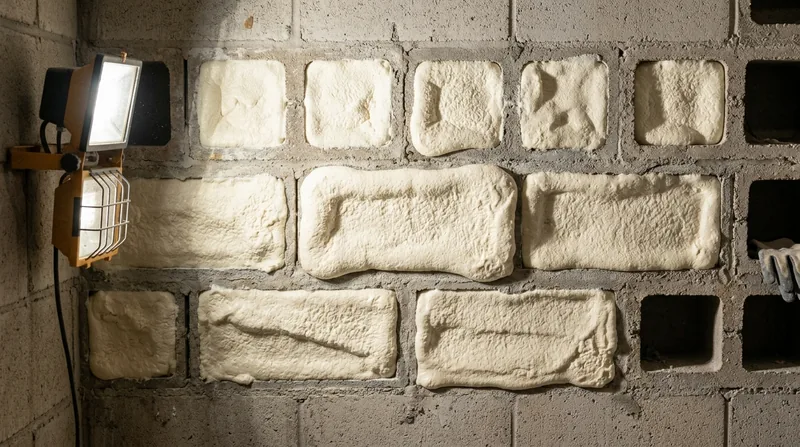




Closed cell spray foam insulation in West Palm Beach stops vapor dead at the source, which matters because humidity here runs thick nearly all year and pushes relentlessly toward conditioned rooms. The county sits in IECC climate zone 2A, where outdoor air is almost always hotter and wetter than the air conditioning inside, meaning vapor drive works inward through every gap in rim joists, block wall cavities, and garage ceilings. Closed cell foam delivers a true air barrier that holds up through hurricane season storms and the daily weather swings that characterize this region. Whether you're in Northwood's 1920s wood-frame homes, the concrete block cores of Lake Worth Beach and Lake Clarke Shores, or the newer slab-on-grade construction spreading west through Wellington and Royal Palm Beach, the cooling load is driven by attic heat and ductwork bleeding air before it reaches the vents. We've been sealing those losses since 2012 with closed cell foam applied to the exact R-value and thickness your address requires.
Why Closed Cell Spray Foam Matters in West Palm Beach's Hot, Humid Climate
Vapor pressure in South Florida is the enemy of fiberglass and blown-in cellulose. When outdoor humidity meets a vented attic, moisture finds its way into wall cavities and rim joists, turning insulation into a conductor instead of a barrier. Closed cell foam stops that vapor drive cold because it has an inherent vapor permeance rating that blocks moisture migration while still allowing the assembly to dry if needed. The dense cellular structure also provides air sealing that loose-fill products cannot match, which is why it's the standard choice for rim joists on block homes, garage ceilings that face exterior walls, and wall cavities being retrofitted without demolition.
- Closed cell foam creates an air barrier that stops vapor drive from outside pushing into conditioned rooms.
- The material holds an R-value of 6.0 to 6.5 per inch, meaning you reach code-required R-values in half the thickness that open cell would need.
- It remains stable through hurricane-force wind pressure and the thermal cycling that daily storms in West Palm Beach create.
- Closed cell can be applied to wet substrates after proper moisture remediation, and it cures fast enough that re-entry windows stay realistic.
- The product works equally well on rim joists of concrete block homes, band joists of pre-1980 wood-frame stock, and garage ceilings where condensation risk is highest.
Getting closed cell foam applied correctly is the difference between stopping cooling loss and just adding another layer of fiberglass that will trap moisture.
West Palm Beach example: A concrete block home in Lake Worth Beach with a vented attic and ductwork running overhead loses roughly 30 to 40 percent of cooled air before it reaches the rooms below. Closing that attic with closed cell foam on the roof deck or sealing the rim joist with 1.5 to 2 inches of closed cell stops vapor from entering the walls and keeps the conditioned space from leaking into the unconditioned attic. That's the job that moves the needle on cooling bills in this county.
Florida's building code and the local building department in your city govern R-value requirements, ignition barriers, and thermal barriers. Defer to the building official for your address; we help you understand what applies, but the code is theirs to enforce. See the Palm Beach County Government website for permit and code resources specific to your jurisdiction.
How We Apply Closed Cell Spray Foam in West Palm Beach: The Process
Closed cell foam is sprayed at a specific ratio and drum temperature, and it cures in real time. We start by identifying the substrate, confirming it's dry and sound, then set up mechanical ventilation for the space. The foam is applied in multiple passes to reach the exact thickness your estimate specifies, with each pass allowed to rise and cure before the next layer goes down. This controlled approach prevents over-application, maintains the R-value per inch, and ensures the material cures uniformly without off-gassing issues after you re-enter the space.
- We inspect the attic, crawl space, rim joist, or wall cavity to confirm the substrate is dry and to identify any moisture sources that need fixing first.
- Mechanical ventilation is set up and left running during the entire spray and cure cycle to manage vapor and odor.
- Closed cell foam is applied in controlled passes, with each layer allowed to fully rise and set before the next application begins.
- We verify final thickness and R-value on site and document the specifications in your written estimate and job record.
- A re-entry window of 24 to 48 hours is standard; we provide clear guidance on when the space is safe to occupy and when HVAC can be turned back on.
The result is an air barrier and vapor break that holds up through the thermal shock of West Palm Beach summers and the moisture pressure of the wet season.
Wellington example: A newer townhome in Wellington with ductwork running through a vented attic and a rim joist on the west-facing side gets 1.5 inches of closed cell on the roof deck and 2 inches on the rim joist. The foam is applied in two passes on the roof, one on the rim. Mechanical ventilation runs for the entire spray and cure. Total time on site is 4 to 6 hours. Re-entry is safe after 24 hours, and cooling efficiency improves within the first billing cycle.
For a detailed look at our approach to similar work, see our air sealing service page, where we cover the broader strategy of stopping air leakage across your home.
| Approach | Description | Best For |
|---|---|---|
| Closed Cell Rim Joist Sealing | 1.5 to 2 inches of closed cell foam applied to the rim joist band and any exposed sill plate, creating an air barrier and vapor break between the conditioned interior and the unconditioned crawl space or exterior. | Concrete block homes in Lake Worth Beach, Boynton Beach, and the city core where rim joists are a major source of cooling loss and vapor infiltration. |
| Closed Cell Attic Roof Deck Spray | Closed cell foam applied to the underside of the roof deck to create a sealed attic (also called a conditioned attic), stopping heat radiating down through the ceiling and air leakage from ductwork. | Homes across West Palm Beach, Delray Beach, and Palm Beach Gardens where ductwork sits in a vented attic and cooling bills are driven by attic heat and duct leakage. |
| Closed Cell Wall Cavity Injection | Closed cell foam injected into existing wall cavities through small holes, filling gaps left by failed fiberglass or settling without demolition, restoring the air barrier and R-value. | Pre-1980 wood-frame homes in Northwood and El Cid where original insulation has settled or where cavity depth limits open cell use. |
| Closed Cell Garage Ceiling Spray | 2 to 3 inches of closed cell foam applied to the underside of a garage ceiling, providing air sealing and R-value while preventing condensation on steel framing and overhead doors. | Attached garages in Wellington, Royal Palm Beach, and newer slab homes where the garage ceiling is a direct thermal bridge to the attic or unconditioned space above. |
| Closed Cell Metal Building Condensation Control | Closed cell foam applied to the interior of metal building walls and roof to prevent condensation on steel and create a thermal break between exterior and interior. | Barndominiums, agricultural buildings, and metal-frame commercial spaces in the Acreage and outlying areas where daily temperature and humidity swings create condensation risk. |
Closed Cell Spray Foam Insulation Cost in West Palm Beach: What to Expect
Closed cell spray foam is priced per board foot, starting at approximately $1.20 to $1.50 per board foot for standard attic and rim joist work in West Palm Beach. A board foot is 12 inches by 12 inches by 1 inch thick. The cost moves based on several real factors: the size of the area being sprayed, accessibility (crawl spaces and tight rim joists cost more to reach), substrate condition (wet areas require moisture remediation before foam goes down), and the final R-value thickness you need for your address and use. A rim joist job on a 2,000-square-foot home might run 800 to 1,200 board feet, putting the material cost in the $960 to $1,800 range before labor and setup. A sealed attic on the same home could be 2,000 to 3,500 board feet depending on pitch and rafter spacing, pushing the total higher. The only way to know your cost is to get a written estimate with R-value and thickness specs on site.
We provide free estimates within 24 hours and break down the board footage, R-value, thickness, and labor cost so you understand what you're paying for. Call us at (561) 621-4973 or visit our pricing page for more detail on how we structure estimates.
What to Look for When Hiring a Closed Cell Spray Foam Contractor Near West Palm Beach
The spray foam trade has two extremes: rig-and-run crews that trailer in from out of state, spray a job in an afternoon, and disappear when the smell won't go away, and national franchises that charge premium prices with minimal local accountability. A local independent contractor with a local address and a track record in West Palm Beach sits in the middle, and it's where you find the best value. When you're comparing contractors, ask for a written estimate that includes R-value and thickness, not just a price per square foot. Verify that the contractor is fully insured and ask to see the certificate of insurance naming you as an additional insured. Check references from homes in your neighborhood, because a job in Wellington is not the same as a job in Lake Worth Beach. Ask about mechanical ventilation during the spray and cure, and confirm the re-entry window in writing. If the estimate has no specs, the price is far below market, or immediate re-entry is promised, walk away.
- Request a written estimate that specifies R-value, thickness in inches, and total board feet, not a price per square foot.
- Confirm the contractor is fully insured and ask for proof of coverage before any work starts.
- Ask for three references from homes in West Palm Beach or nearby areas where similar work was completed in the past two years.
- Verify that mechanical ventilation will be used during the spray and cure cycle, and get the re-entry window in writing.
- Check whether your HOA or local building department requires permits for the work; the contractor should help you navigate this, not promise to handle it all.
Getting multiple estimates is always smart because it forces you to compare apples to apples and exposes low-ball pricing that cuts corners on ventilation, ratio, or curing time.
Ready to get started? Contact us for a free estimate or call (561) 621-4973 to discuss your specific project and what closed cell foam can do for your home or building.
Closed Cell Spray Foam Insulation in West Palm Beach: Pricing Guide
| Service | Price | Details |
|---|---|---|
| Rim Joist & Band Joist Sealing | Starting at $1.20/board ft | 1.5 to 2 inches of closed cell applied to rim and sill plate; cost varies by linear feet and substrate accessibility |
| Attic Roof Deck Spray (Sealed Attic) | Starting at $1.20/board ft | Closed cell applied to underside of roof deck; total cost depends on attic size, rafter spacing, and final R-value thickness required |
| Wall Cavity Injection & Retrofit | Starting at $1.35/board ft | Closed cell injected into existing cavities without demolition; premium over roof spray due to access and controlled application |
| Garage Ceiling & Metal Building Spray | Starting at $1.25/board ft | 2 to 3 inches typical; condensation control on steel adds value; final thickness and R-value set by on-site inspection |
| Large-Scale or Complex Projects | On estimate | Crawl spaces with standing water, wet substrates requiring remediation first, or jobs exceeding 5,000 board feet need site inspection |
| Free Estimate | No charge | Response within 24 hours at (561) 621-4973; includes R-value, thickness, board footage, labor, and total cost |
Indicative pricing, the exact cost depends on square footage, finish, and site access. Free personalized estimate within 24h at (561) 621-4973.


